









Opening up New Opportunities with Pediatric Therapy in Spanish!

bilingual speech therapist doing a teletherapy session

Brittany: Hello! My name is Brittany, I am the bilingual Speech Pathologist at Metro EHS in Sterling Heights and Detroit.

Mallory: Hi! My name is Mallory, and I work in the Human Resources Department at the administrative office in Plymouth.

B: And we are so excited to announce that MetroEHS now offers speech therapy in Spanish and English!

M: That’s great! We can service Metro Detroit kids in their native language! But Brittany, can you tell me how to know if my child needs speech therapy?

B: Sure! If you have concerns about the language or articulation development of your child, it is possible that he/she might benefit from speech therapy. For example, if your child cannot pronounce certain sounds, does not say a lot of words or combine words to form sentences, or if you cannot understand him/her, we can do an evaluation to see if he/she qualifies for speech therapy.

M: That sounds great! What happens next?

B: After the evaluation, if therapy is necessary, we are able to initiate therapy in English, Spanish, or both languages to help your child communicate with family, friends and all of the people in the child’s life using their preferred language.

M: So cool! Are any other therapies offered?

B: Of course! We also offer therapy for feeding difficulties, stuttering, problems with social language secondary to autism, and the use of augmentative and alternative communication for children who are not able to talk using verbalizations. Here at MetroEHS we also offer occupational and behavior therapy at all of our centers. We have a phenomenal team of therapists that provide individualized services for your child. And Mallory, you can assist Spanish-speaking families get started, right?

M: Of course! We accept most insurances. I would be happy to answer any questions that families might have. Call our office to see if your child might benefit from speech therapy or other therapies in Spanish, English, or both languages. Our telephone number is 313-278-4601. We would love to talk to you!

Brittany: Hola! Me llamo Brittany y soy la terapeuta bilingue de habla en MetroEHS en Sterling Heights y Detroit.

Mallory: Hola! Me llamo Mallory y trabajo en el departamentro de recursos humanos en la oficina administrativa en Plymouth.

Brittany: Estamos emocionados de anunciar que MetroEHS ofrece la terapia de habla en ingles y espanol.

Mallory: Que excelente! Podemos proporcionar la terapia de habla a ninos en MetroDetroit en su idioma nativo. Brittany, me puedes explicar como saber si mi hijo necesita la terapia de habla.

Brittany: Por supuesto! Si tiene preocupaciones del desarrollo del lenguaje o de la articulacion de su hijo es posible que se beneficie de la terapia de habla. Por ejemplo,  si su hijo no puede pronunciar ciertos sonidos, no dice muchas palabras ni combina palabras para hacer oraciones, o si no le puede entender a su hijo, podemos hacer una evaluacion para ver si califica para la terapia de habla.

Mallory: Suena muy bien! Que pasara despues?

Brittany: Despues de la evaluacion, si las terapias son necesarias, podemos iniciar las terapias en ingles, espanol o ambos idimos para ayudar a hijo a comunicarse con la familia, los amigos y todas las personas en su vida usando su idioma preferido.

Mallory: Guau(wow)! Ofrecen otras terapias?

Brittany: Tambien ofrecemos terapias para dificultades con la alimentacion, el tartamudeo, problemas con el lenguje social secundario al autismo, y el uso de comunicacion aumentativa y alternativa para ninos que no puede hablar con verbalizaciones. En MetroEHS, ofrecemos la terapia ocupacional y la terapia de comportamiento (ABA). Tenemos un equipo fenomenal de terapeutas que proporcionan servicios individualizados para su hijo. Mallory, tu puedes ayudar a las familiar que hablar espanol en la oficina, verdad?

Mallory: Por supuesto! Aceptamos muchos seguros medicos. Yo estaria encantada de responder a cualquier pregunta que tenga. Llame nuesta oficina para ver si su hijo se podria beneficiar de la terapia de habla en espanol, ingles, o ambos idiomas. El numero de telefono de la oficina es 313-278-4601. Nos encantaria hablar con usted.

Continue Reading

April 22, 2024

Empowering Communication for Children with Autism: A Look at Therapy Interventions

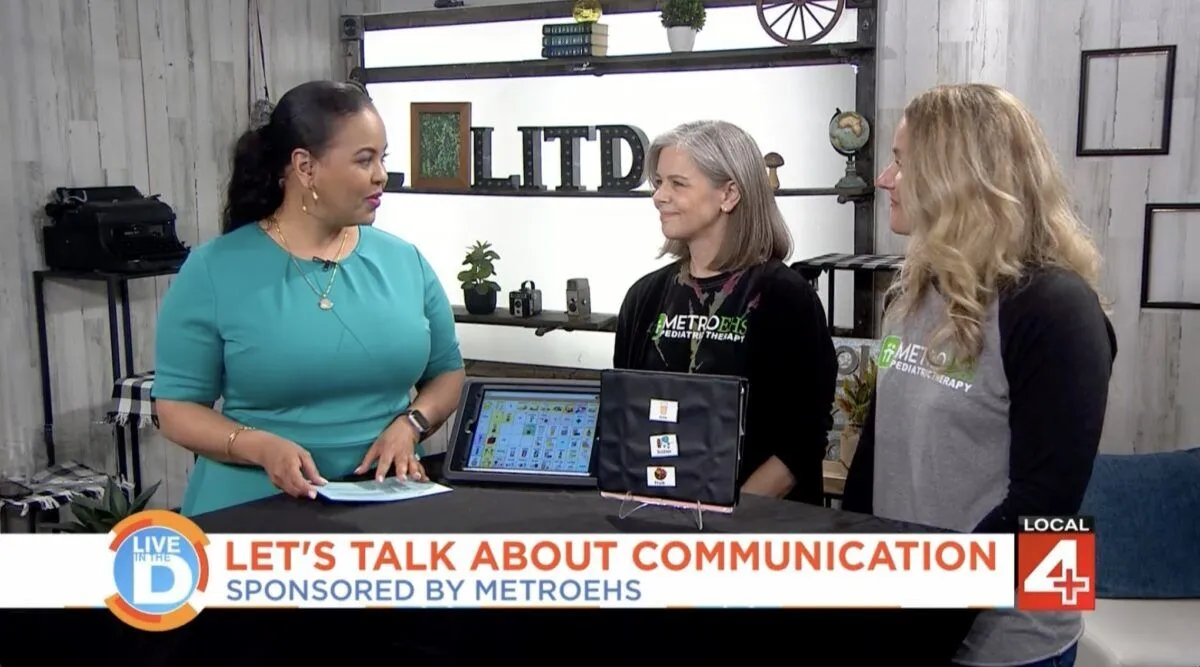
In a recent airing of Live in the D, sponsored by MetroEHS Pediatric Therapy, the spotlight was on Autism Awareness Month, shedding light on how children on the autism spectrum can benefit from life-changing therapy. MetroEHS, a pediatric neighborhood therapy company with multiple locations across Metro Detroit, including expanding services, is dedicated to enhancing the quality of life for children with various therapy needs, including autism.

Deanna Coker, a board-certified behavioral analyst, and Kris Krajewski, a speech therapist with MetroEHS, joined the show to discuss how therapy can significantly impact children’s communication skills.

Understanding Communication Challenges in Autism

Deanna explained that autism, as a developmental disability, often presents challenges in social interaction and communication. Unlike typically developing children who learn language by observing and imitating, children with autism struggle to find meaningful ways to communicate, despite their desire to do so.

The Role of Speech Therapy

Kris emphasized that speech therapy is essential for children with autism, given that communication difficulties are a hallmark characteristic of the condition. Speech therapists, like those at MetroEHS, work to identify barriers to communication and introduce alternative methods for expressing thoughts and needs.

Speech Therapy Interventions

Kris introduced an innovative tool called the AAC device (Alternative and Augmentative Communication), essentially an iPad loaded with specialized software designed exclusively for communication purposes. This device enables children to select words and icons to express themselves, giving them a voice and autonomy in their interactions.

Empowering Communication Through Tools

Deanna highlighted another communication aid, the PECS book (Picture Exchange Communication System), a low-tech solution that uses pictures to help children convey wants, needs, and preferences. By selecting and exchanging pictures, children can effectively communicate with caregivers, enhancing their independence and self-expression.

The conversation between Deanna, Kris, and the show’s host highlighted the importance of therapy in empowering children with autism to communicate effectively. Through innovative interventions and specialized tools, such as AAC devices and PECS books, children can overcome communication barriers and actively engage with the world around them.

For families seeking therapy services for their children, MetroEHS offers comprehensive support, including ABA, speech, occupational, feeding, and physical therapies. With multiple locations across Metro Detroit and additional centers on the way, MetroEHS aims to make therapy accessible and impactful for families in need.

October 21, 2024

What Is Pediatric DMI Therapy and How Does It Support Motor Development?

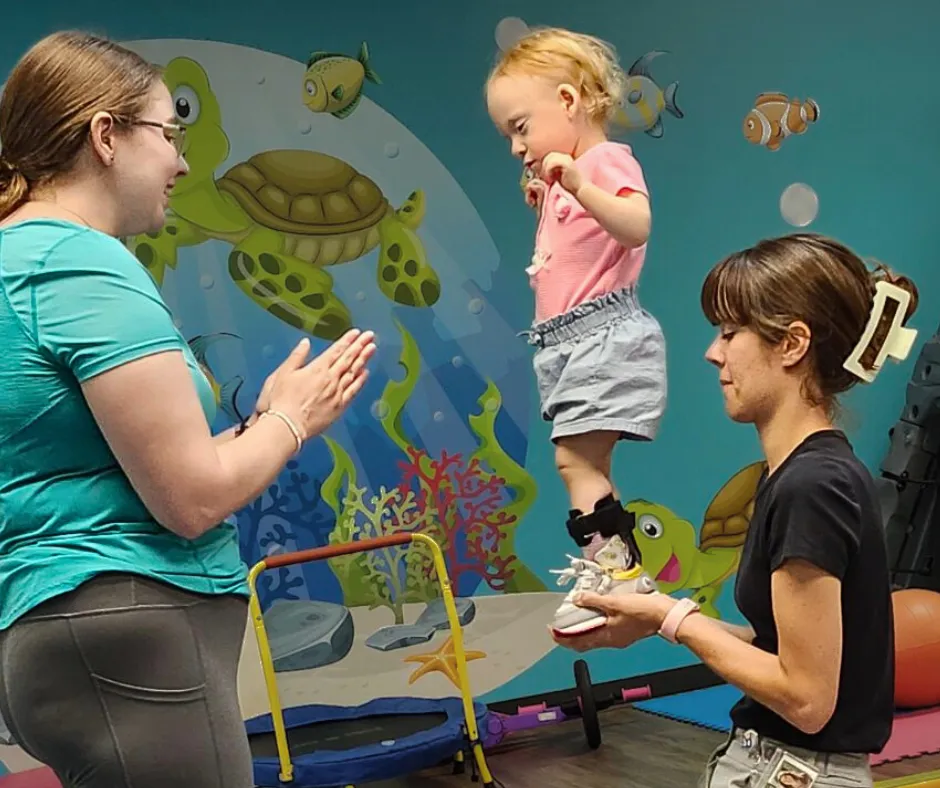
Pediatric Dynamic Movement Intervention (DMI) therapy is a specialized treatment aimed at improving the gross motor skills, movement control, and overall functional mobility of children with developmental delays.  DMI therapy is designed to promote and enhance the natural ability of children to develop motor skills through structured, targeted interventions.

What is Dynamic Movement Intervention (DMI)?

Dynamic Movement Intervention (DMI) is a cutting-edge therapeutic approach focusing on improving strength, coordination, balance, and motor planning in children with developmental delays. DMI therapy is based on neuroplasticity principles—the brain’s ability to reorganize itself by forming new neural connections. This means that with consistent and well-targeted interventions, children with motor impairments could make significant gains in motor function.

Without disruption or intervention, unhealthy habits (the types of learned patterns of movement a child relies on rather than reflexive movements) become engrained in the child’s behavior repertoire. Neuroplasticity is defined as the ability of the brain to form and reorganize synaptic connections, especially in response to learning, experience, or following an injury. Neuroplasticity is at its height in young children. Without novelty and challenge, well-established habits always dominate. Due to this natural neuroplasticity, it is often better to start children young with any kind of therapeutic care.

The primary theory behind DMI is the use of the body's automatic postural responses.  In DMI therapy, we place the child in a position where gravity provides information requiring a response. We then wait for the child to complete the movement, with gradually less assistance over time.

Who Needs DMI Therapy?

DMI is beneficial for children with and without a specific diagnosis. However, those with specific diagnoses include, but are not limited to:

Cerebral Palsy: Children with cerebral palsy often struggle with motor control, muscle tone, and balance, all of which can be targeted by DMI therapy.

Developmental Delays: Children experiencing delays in reaching motor milestones (such as crawling, walking, or standing) may benefit from DMI’s movement-based approach.

Genetic Disorders: Certain genetic conditions that affect motor development, such as Down syndrome or muscular dystrophy, may be candidates for DMI.

Spina Bifida: This congenital condition affecting the spinal cord can cause motor deficits, and DMI can be useful in strengthening movement capabilities.

Brain Injuries: Traumatic or acquired brain injuries in children that result in impaired motor functions can be addressed through DMI therapy.

Other symptoms of a child who could benefit from DMI include:

  • Difficulty with postural control (e.g., sitting, standing, or balancing)
  • Delayed or atypical motor development (not crawling or walking at the expected age)
  • Limited muscle tone or spasticity
  • Challenges in coordination and movement precision
  • Fatigue or weakness during movement activities

This is not an exhaustive list. There are many other conditions that may benefit from Dynamic Movement Intervention. DMI therapy is typically recommended for children who have developmental motor disorders or neuromuscular challenges that affect their ability to move, balance, or coordinate their body movements.

Identifying the Need for DMI

The need for DMI therapy is typically identified by healthcare professionals such as neurologists, rehabilitation specialists or physical therapists, often after a comprehensive evaluation of the child’s motor function. Parents may also notice signs that their child is not reaching developmental motor milestones and seek medical advice.

Any physical therapy diagnosis can result in the use of DMI, and this is often very useful for children under 1 to help with head control, children under 2 to help with standing, walking, and posture control, and children 5 and under with more involved diagnoses. Early identification and intervention are extremely beneficial in maximizing the effectiveness of DMI therapy and improving the child’s functional outcomes.

May 2, 2025

Neuroplasticity: The Brain’s Superpower!

Calling All Brain Boosters and Therapy Sidekicks!

Did you know your child’s brain has a superpower? That’s right — it’s called neuroplasticity, and it’s basically the brain’s way of saying, “Hey, I can grow, change, and level up — just give me a reason!”

In the world of pediatric therapy, neuroplasticity is our superhero ally. It means that with the right kind of training and enough repetition, a child’s brain can form new pathways, build stronger connections, and unlock abilities they never thought possible. And guess what fuels this superpower?

Intensive Intervention!

Due to a child’s neuroplasticity, MetroEHS ensnares this rapid growth acceleration by declaring Intensive Intervention as the most effective strategy in revealing the SUPER in every child. We’re talking 5 sessions a week, not because we’re trying to break a record — but because that’s how we build real, lasting change.

Think of it like superhero training camp. If your goal is to fly, shoot webs, or develop super speed, do you practice once a week and hope for the best? Nope! You train every day, building your skills and flexing those brain muscles!

Here’s why 5x a week is a power move:

  • More reps = stronger brain connections
  • Faster progress = more confidence
  • Consistent practice = real-world impactSo, when a child engages in therapy intensively and regularly, they’re not just “working hard” — they’re giving their brain the super fuel it needs to thrive. Whether it’s building communication skills, mastering motor movements, or learning how to regulate emotions, frequent sessions give the brain the boost it needs to rewire and rise to its fullest potential.“With great [brain] power comes great responsibility!” And we believe in giving kids every opportunity to grow into their best, brightest, most confident superhero selves. Ready to suit up and supercharge those neural pathways? Let’s go!